
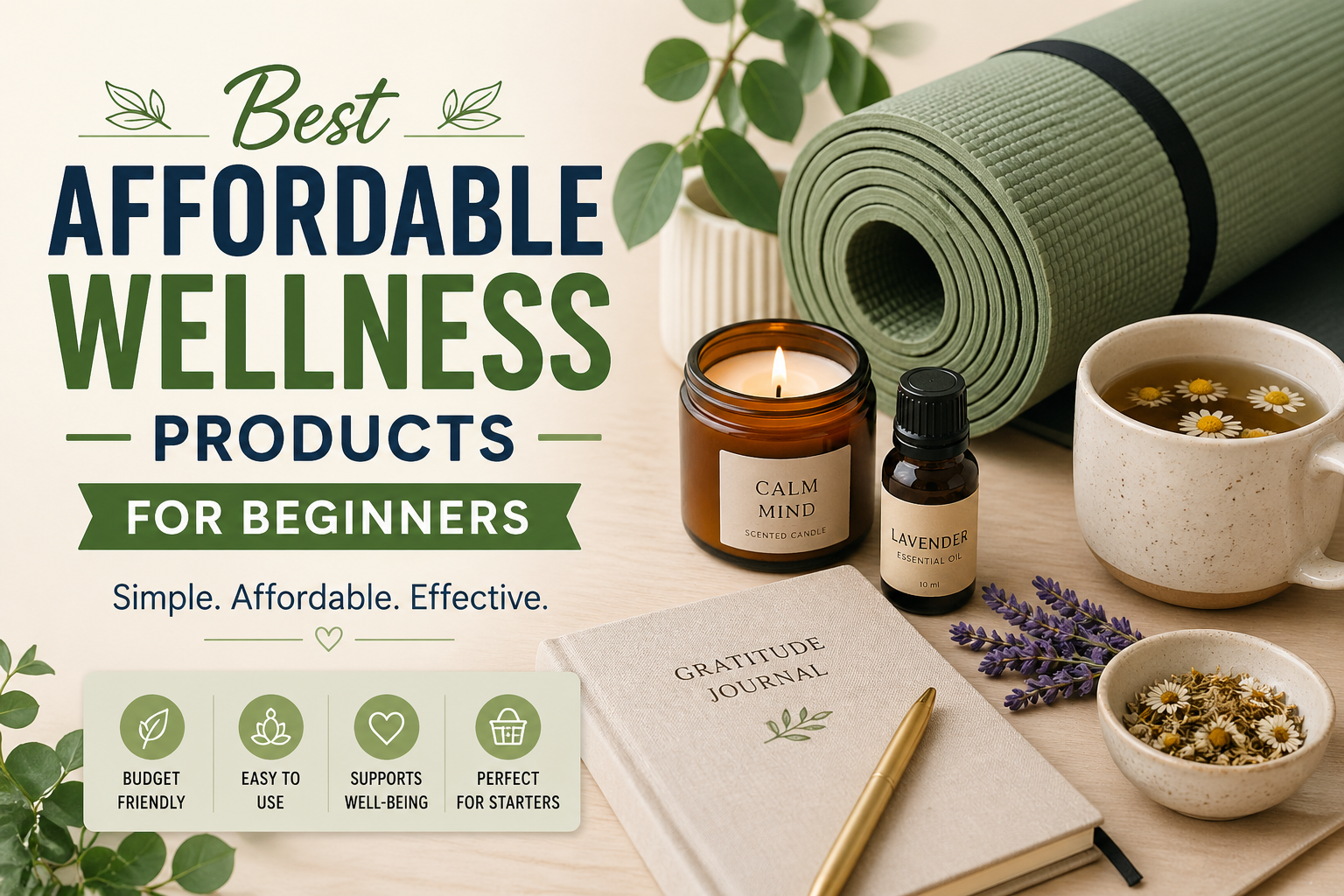
Best Affordable Wellness Products for Beginners
Starting a wellness journey can feel overwhelming. Walk into any health store or scroll through any wellness brand’s website, and you will be greeted by hundreds of products, each promising to change your life. The prices can be shocking too. It is easy to assume that taking care of yourself requires spending a small fortune on supplements, gadgets, and specialty items you have never heard of before.
Here is the truth though: you do not need to spend a lot to feel genuinely better. Some of the most effective wellness tools are surprisingly simple and affordable. Whether you are trying to sleep better, reduce stress, move more, or just build healthier daily habits, there are beginner-friendly products that actually deliver without draining your wallet.
This guide is put together for people who are just starting out. No complicated routines, no overwhelming supplement stacks, and no products that require a manual to figure out. Just honest, practical picks that work.
Why Wellness Does Not Have to Be Expensive
The wellness industry is worth hundreds of billions of dollars globally, and a big part of its marketing strategy is convincing you that more expensive always means more effective. That is rarely true, especially for beginners.
When you are just starting your wellness journey, your body and mind respond well to foundational changes. Better sleep, more water, daily movement, reduced stress, and a bit of mindfulness go a long way. You do not need a $300 infrared sauna blanket or a $150 adaptogen powder blend to feel those changes. A $10 journal, a $15 foam roller, or a simple reusable water bottle can move the needle just as meaningfully when you are starting from scratch.
The goal of this post is to focus on products that are genuinely useful, easy to start using today, and priced so that anyone can give them a try.
Hydration and Nutrition Basics
A Quality Reusable Water Bottle
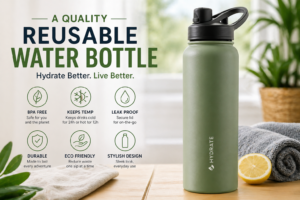
This is the single most impactful wellness purchase most beginners can make. Dehydration affects your energy, your focus, your skin, your digestion, and your mood. Most people walk around mildly dehydrated most of the day simply because drinking water is not top of mind.
A good reusable water bottle that you actually like carrying around changes that. Look for one that keeps water cold for several hours, has a size that works for your daily routine, and is easy to clean. You do not need to spend a lot here. Plenty of reliable stainless steel and BPA-free plastic options sit in the $15 to $25 range and last for years.
Keeping it on your desk, in your bag, or on your nightstand turns drinking water into a habit instead of a chore. That alone is worth the purchase.
Herbal Teas
Herbal teas are one of the most underrated wellness staples. They are affordable, easy to find, warm and comforting, and many varieties carry genuine health benefits backed by research.
Chamomile tea is well known for its calming effects and is a great addition to a nighttime routine. Peppermint tea supports digestion and can ease bloating after meals. Ginger tea is anti-inflammatory and great for nausea. Green tea offers a gentle caffeine lift with L-theanine, which promotes calm focus without the jitters you might get from coffee.
A box of quality herbal tea typically costs between $5 and $12 and gives you dozens of servings. It is one of those small daily rituals that genuinely adds up over time.
A Simple Multivitamin
Before spending money on specialized supplements, covering your nutritional basics with a simple multivitamin makes sense for most beginners. Even with a reasonably healthy diet, gaps in key vitamins and minerals are common, and those gaps can show up as fatigue, poor sleep, low mood, or brain fog.
You do not need anything fancy. A basic multivitamin from a reputable brand in the $10 to $20 range covers vitamin D, B vitamins, magnesium, zinc, and other essentials that many people fall short on. Always check with a doctor or healthcare provider if you have any specific concerns, but for most healthy adults, a daily multivitamin is a low-risk, affordable foundation.
Movement and Physical Wellness
A Foam Roller
If you spend a significant part of your day sitting at a desk, or if you have started exercising more and your muscles feel tight and sore, a foam roller is one of the best investments you can make under $30.
Foam rolling, technically known as self-myofascial release, helps break up tension in your muscles and connective tissue, improves circulation, and reduces post-workout soreness. It feels somewhere between painful and deeply satisfying, and after a few minutes of rolling out your back, legs, and hips, your body feels noticeably looser and more relaxed.
There are plenty of beginner-friendly tutorials online, and using one for just 10 minutes a few times a week can make a meaningful difference in how your body feels day to day.
Resistance Bands
Resistance bands are one of the most versatile and budget-friendly fitness tools available. A set of bands in varying resistance levels typically costs between $10 and $25 and takes up almost no space. You can use them for full-body strength training, stretching, physical therapy exercises, and warm-up routines.
They are particularly great for beginners because they allow you to build strength gradually without the intimidation factor of a gym or the expense of dumbbells and machines. Dozens of free workout routines specifically designed for resistance bands are available online, making it easy to get started with zero experience.
A Yoga Mat
Even if you have no interest in yoga specifically, a good yoga mat is one of the most useful wellness purchases for beginners. It gives you a dedicated space for stretching, bodyweight exercises, morning routines, meditation, or breathwork. That physical space, a mat on the floor that is yours for your wellness practice, does something subtle but powerful. It makes showing up feel more intentional.
Basic yoga mats are available for $15 to $30 and hold up well for everyday home use. If you decide to practice regularly, you can always upgrade later, but a budget option is perfectly fine to start.
Sleep and Rest
A Sleep Mask
Sleep quality is one of the most important pillars of health, and light disruption is one of the most common and underestimated reasons people do not sleep as deeply as they could. Even small amounts of light creeping through a curtain or from an electronic device can interfere with melatonin production and reduce the quality of your rest.
A comfortable, well-fitting sleep mask blocks that light completely. Good options are available for $10 to $20, often made from soft silk or memory foam that sits gently around your eyes without pressing on them. It is a remarkably simple tool that many people report makes an immediate difference in how rested they feel in the morning.
Magnesium Glycinate
If there is one supplement that comes up repeatedly in wellness conversations for good reason, it is magnesium. A large portion of the population does not get enough magnesium through diet alone, and low magnesium levels are linked to poor sleep, muscle cramps, anxiety, and low energy.
Magnesium glycinate is the form most commonly recommended for beginners because it is gentle on the stomach and highly absorbable. Many people notice improvements in sleep quality and reduced nighttime restlessness within a few weeks of taking it. It is widely available, affordable at around $15 to $25 for a month’s supply, and considered very safe for most adults.
Again, checking with a healthcare provider before adding supplements to your routine is always a good idea, but magnesium glycinate is one of the more universally well-regarded beginner supplements out there.
White Noise Machine or App
Background noise, whether it is traffic outside, a partner snoring, or just the general hum of life, can significantly disrupt sleep even when it does not fully wake you up. White noise works by creating a consistent ambient sound that masks those disruptions and helps your nervous system stay in a calmer, more restful state through the night.
Dedicated white noise machines are available from around $20 to $40 and are a worthwhile investment if environmental noise is an issue for you. Alternatively, free apps on your phone offer white noise, brown noise, pink noise, and nature sounds that work just as well. Starting with an app costs nothing, and if it helps, the machine is a nice upgrade.
Mental Wellness and Stress Relief
A Wellness Journal
Journaling is one of the most accessible mental wellness practices available, and all it requires is a pen and a notebook. Research consistently supports the benefits of regular journaling for managing stress, processing emotions, improving sleep, and gaining clarity on what matters most in your life.
You do not need a fancy guided journal to get started, though those can be helpful for beginners who like having prompts. A simple notebook works perfectly. Even spending five minutes in the morning writing down three things you are grateful for, or a few minutes at night processing how your day went, creates a meaningful shift in how you relate to your own thoughts and feelings over time.
Notebooks designed specifically for wellness journaling with prompts and reflection sections are available for $10 to $20 and make the habit feel a little more intentional from the start.
Essential Oil Roller or Diffuser
Aromatherapy is not a cure for anything, but it is a genuinely pleasant and effective way to signal to your nervous system that it is time to relax. Lavender, in particular, has been studied for its calming effects on the nervous system, and many people find that using it consistently as part of a wind-down routine helps reduce stress and prepare the body for rest.
Pre-diluted essential oil rollers in lavender or other calming blends are available for $8 to $15 and are as simple as rolling onto your wrists or temples. A basic ultrasonic diffuser costs around $20 to $30 and fills a room with a light, calming scent that transforms the atmosphere of a space. Neither is magic, but both are pleasant enough that they make other wellness habits easier to stick with.
A Meditation App Subscription
Meditation is one of the most well-researched mental wellness practices available, with documented benefits for stress reduction, sleep, focus, emotional regulation, and overall wellbeing. For beginners, the hardest part is not the meditation itself but knowing how to start and staying consistent.
Apps like Insight Timer offer an enormous library of free guided meditations covering everything from five-minute breathing exercises to longer body scan sessions. Other popular apps offer structured beginner programs for a modest monthly or annual subscription. Even just five to ten minutes of guided meditation in the morning or evening builds a habit that compounds in its benefits over time.
Starting with a free app costs nothing. If you find yourself using it consistently, a paid subscription with more features is an affordable upgrade worth considering.
Skin and Body Care Basics
A Dry Brush
Dry brushing is a simple body care practice that involves using a firm-bristled brush on dry skin before showering. It exfoliates dead skin cells, stimulates circulation, and many people find it invigorating and energizing first thing in the morning. There is also evidence that it supports lymphatic drainage, which plays a role in the body’s natural detoxification processes.
Good dry brushes are available for $8 to $20. The technique takes a minute to learn but quickly becomes a satisfying part of a morning routine. Your skin feels noticeably smoother after the first few uses.
SPF Moisturizer
Sun protection is one of the most scientifically supported skincare habits you can build. Daily use of SPF not only reduces the risk of skin cancer but also prevents premature aging more effectively than almost any other skincare product you could buy. For beginners who want a simple, high-impact skin wellness habit, adding an SPF moisturizer to their morning routine is one of the best places to start.
Plenty of excellent daily moisturizers with SPF 30 or higher are available at drugstore prices, typically in the $10 to $20 range. Wearing sunscreen every day, even on overcast days or when mostly indoors near windows, is one of the simplest and most impactful things you can do for your long-term skin health.
Epsom Salt
A warm bath with Epsom salt is one of the most relaxing and therapeutic things you can do for sore muscles and mental stress without spending much at all. Epsom salt is essentially magnesium sulfate, and soaking in it allows for some absorption of magnesium through the skin while the warm water works on muscle tension and the quiet ritual of a bath does wonders for the mind.
A large bag of Epsom salt costs around $5 to $10 and provides many baths worth of use. Adding a few drops of lavender essential oil turns it into a genuinely restorative evening ritual that costs almost nothing per use.
How to Build a Beginner Wellness Routine Without Overwhelm
One of the biggest mistakes people make when starting a wellness journey is trying to change everything at once. They buy a dozen products, set up a two-hour morning routine, and then burn out within two weeks when real life gets in the way.
A much more effective approach is to start with one or two changes that feel manageable and build from there. Pick the area of your wellness that feels most in need of attention right now. Is it sleep? Start with a sleep mask and magnesium. Is it stress? Begin with a journal and a meditation app. Is it movement? Get a foam roller and try using it for ten minutes three times a week.
Small, consistent steps always outperform dramatic but unsustainable overhauls. Once a habit feels automatic, you add the next one. Over months, those small habits compound into a genuinely healthier lifestyle, and you have built it in a way that actually sticks.
A Few Things to Keep in Mind
Not every product works the same way for every person. Bodies are different, lifestyles are different, and what makes a meaningful difference for one person may not do much for another. The best approach is to try things one at a time so you can actually tell what is helping.
Also, wellness products are tools, not solutions. A foam roller does not replace movement. A journal does not replace therapy when therapy is what you need. Supplements do not replace a reasonably balanced diet. Think of these products as supports that make healthy habits easier, more enjoyable, and more sustainable rather than shortcuts to health.
And finally, pay attention to your body and your own experience. You know yourself better than any product review or wellness influencer does. If something works for you, keep doing it. If it does not, try something else. There is no single right way to take care of yourself, and the best wellness routine is the one you actually follow.
Final Thoughts
Starting a wellness journey does not require a big budget or a dramatic lifestyle overhaul. It starts with small, intentional choices made consistently over time. A reusable water bottle you fill up every morning. A foam roller you use while watching television. Five minutes of journaling before bed. A cup of chamomile tea as part of your wind-down routine.
These are not glamorous things. They are not going to go viral on social media. But they work, and they work precisely because they are simple enough to actually do every day.
The products in this guide are a starting point. Pick one or two that speak to where you are right now, give them a genuine try, and see how you feel after a few weeks. Wellness is not a destination you arrive at. It is a way of paying attention to yourself, and it can begin with something as simple as drinking a little more water today.
We write rarely, but only the best content.
