Why Choosing the Right Online Store Actually Matters
It’s tempting to think of this as an overblown concern, but the numbers tell a different story. Online shopping scams are now one of the most frequently encountered fraud types, with recent surveys finding that around 7 in 10 consumers have encountered a shopping scam or attempt while buying online, and more than half admit to having fallen for one at least once.
Fraud researchers have also found that a large share of shoppers who land on a fake or spoofed shopping site end up engaging with it in some way, whether that’s entering payment details, creating an account, or sharing personal information. And scam activity doesn’t stay flat throughout the year. Fraud attempts tend to spike sharply around major shopping events like Black Friday and Cyber Monday, when shoppers are moving fast and comparing prices across dozens of unfamiliar sites.
None of this means you should avoid shopping online. It just means a few minutes of due diligence before you buy can save you a real headache later, whether that’s a missing package, a compromised card, or a drawn-out dispute with your bank.
Signs of a Trustworthy Online Store
Before you get to the red flags, it helps to know what a legitimate store usually looks like. Trustworthy retailers tend to share a few common traits.
1. A Secure, Properly Configured Website
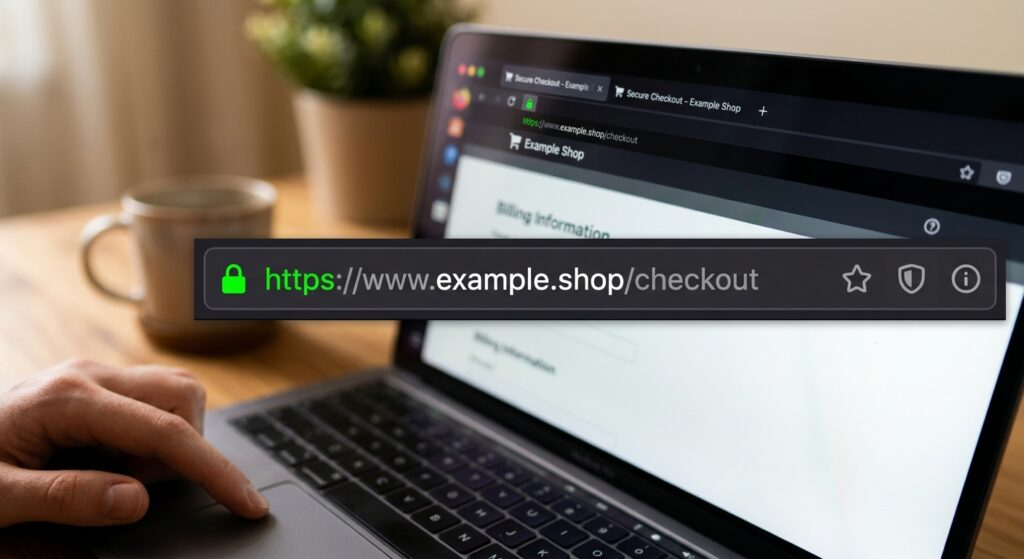
Look at the address bar. The website URL should start with “https” and show a padlock icon, which indicates the connection is encrypted. This alone doesn’t prove a store is legitimate (scammers can get SSL certificates too), but its absence is a clear warning sign. If a checkout page isn’t secured, don’t enter any payment information.
2. Clear Contact Information
Real businesses want to be reachable. Check for:
- A physical business address, not just a P.O. box
- A working customer service phone number or live chat
- A monitored email address, not a generic contact form with no other option
- Active social media accounts with genuine engagement, not just follower counts
If you can only find a contact form and nothing else, that’s worth pausing on.
3. Transparent Policies
Legitimate stores publish detailed, easy-to-find policies covering shipping timelines, returns, refunds, and privacy. Vague or missing policy pages, or policies that seem copied and pasted from another brand, are a signal to slow down.
4. Consistent Branding and Professional Design
Scam sites are often built quickly using templates, and small details give them away: stretched logos, inconsistent fonts, awkward translations, or product photos that clearly come from stock image libraries rather than the retailer’s own catalog. A store that has invested in a coherent, professional look is at least investing in staying around.
5. Verifiable Reviews Across Multiple Platforms
Don’t rely solely on the reviews shown on the store’s own website, since these can be curated or fabricated. Cross-check the brand on independent platforms such as Trustpilot, the Better Business Bureau, or Google Business Profile. Fake reviews are a widespread problem across ecommerce, so look for reviews that are detailed and specific rather than short, generic, and overly enthusiastic.
Red Flags That Signal an Untrustworthy Online Store
Scammers rely on urgency and unfamiliarity to get shoppers to skip the checks above. Here are the warning signs that come up most often.
Prices That Are Dramatically Lower Than Everywhere Else
A discount is one thing. A designer handbag at 80 percent off, or the newest phone model at half the normal price, is another. Scam sites frequently use unrealistic discounts to create urgency and short-circuit careful thinking. If a deal seems out of line with what every other retailer is charging, treat it with suspicion rather than excitement.
High-Pressure Countdown Timers and Stock Warnings
“Only 2 left in stock” and “Sale ends in 10 minutes” banners aren’t automatically fraudulent, plenty of legitimate retailers use urgency marketing, but on an unfamiliar site they’re a common pressure tactic designed to stop you from researching the seller first.
A Very Recent Domain Registration
You can check when a domain was registered using a free WHOIS lookup tool. A store claiming to be an established brand but with a domain that’s only a few weeks old is a strong warning sign, particularly around major shopping seasons when researchers have documented spikes in newly created, holiday-themed fake stores mimicking well-known retailers.
Limited or Unusual Payment Options
Legitimate stores accept standard, traceable payment methods such as major credit cards or established digital wallets. Be wary of stores that:
- Only accept wire transfers, cryptocurrency, or gift cards
- Push you toward payment apps intended for friends and family transfers
- Ask you to complete the transaction “off platform” outside of a marketplace’s official checkout
These payment methods typically offer little to no buyer protection, which means there’s often no way to recover your money if something goes wrong.
Typos, Grammar Issues, and Odd Phrasing
Product descriptions and policy pages full of awkward phrasing or inconsistent translation can indicate a rushed or overseas operation with no real accountability. This isn’t a guaranteed sign of fraud on its own, but combined with other red flags it adds up.
No Verifiable Reviews, or Reviews That Feel Copy-Pasted
If a store has thousands of five-star reviews that all read similarly, or if a quick search of the brand name plus “scam” or “reviews” turns up complaints about undelivered orders, take that seriously. Independent research into online reviews has found that a meaningful share of reviews across ecommerce platforms are fake, so patterns matter more than star ratings alone.
A Step-by-Step Checklist Before You Buy
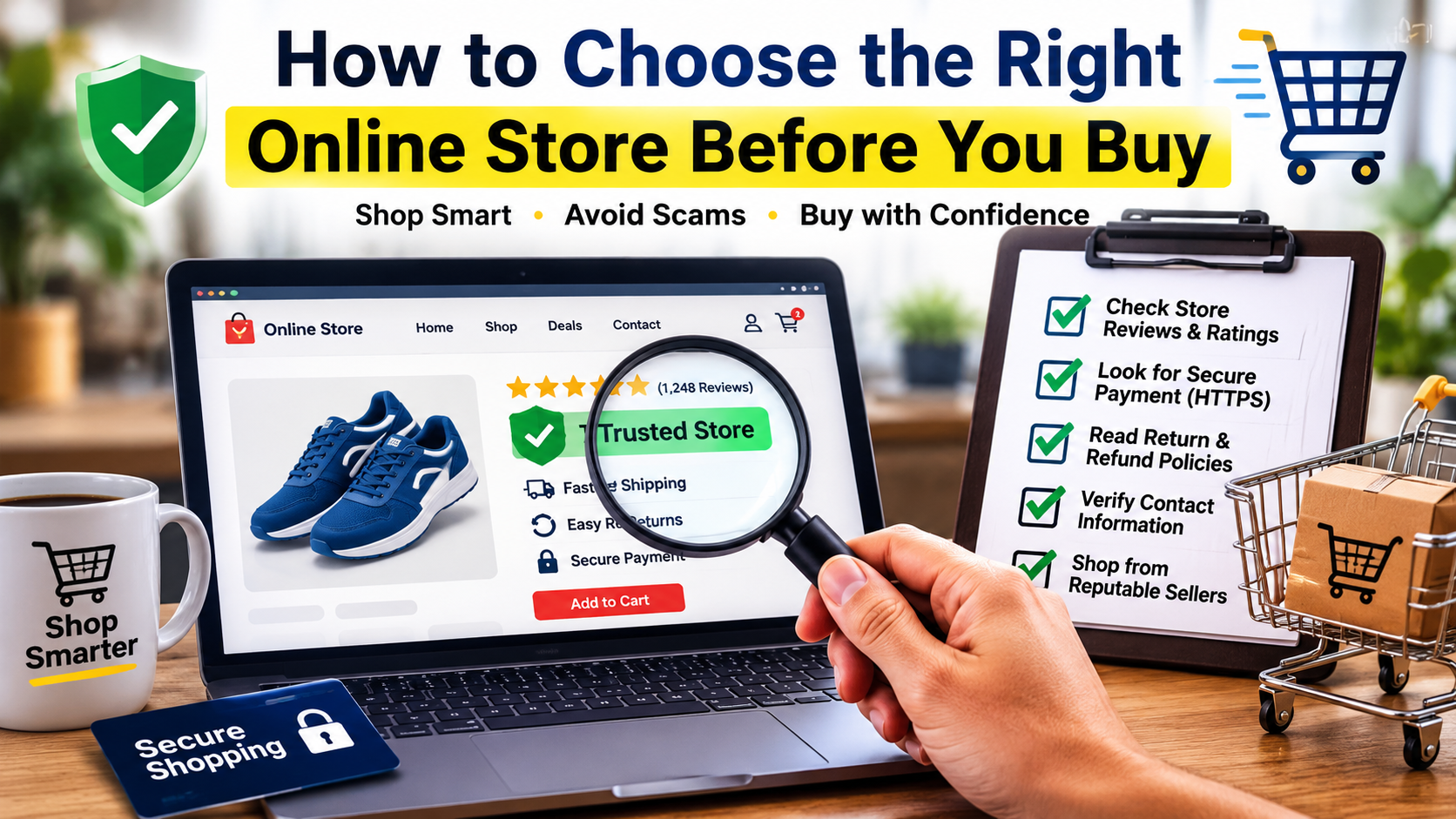
Here’s a simple pre-purchase routine you can run through in a few minutes, especially for a store you haven’t bought from before.
| Step | What to Check | Why It Matters |
|---|---|---|
| 1 | Search the store name plus “reviews” or “scam” | Surfaces complaints or confirms a track record |
| 2 | Look for https and a padlock at checkout | Confirms your data is encrypted in transit |
| 3 | Find a real address and working phone number | Legitimate businesses are reachable |
| 4 | Read the shipping, return, and refund policy | Vague or missing policies signal risk |
| 5 | Check the domain age with a WHOIS lookup | Very new domains warrant extra caution |
| 6 | Pay with a credit card or trusted digital wallet | Gives you dispute and chargeback protection |
| 7 | Compare the price against other known retailers | Unrealistic discounts are a common lure |
Where You Shop Matters Too
Shopping Through Marketplaces
Marketplaces like Amazon, eBay, and Etsy add a layer of protection because they mediate disputes and often offer buyer guarantees. That said, third-party sellers on these platforms aren’t automatically trustworthy just because the marketplace itself is. Check the individual seller’s rating, how long they’ve been active, and whether their reviews look genuine before buying from them specifically, not just the platform overall.
Shopping From Ads on Social Media
Social media ads are one of the more common ways shoppers land on scam sites, since ads can be created quickly, targeted precisely, and taken down before enough complaints pile up. If you see a product through a social media ad and want to buy it, it’s worth searching for the brand independently rather than clicking straight through, just to confirm it has a real, established presence beyond that one ad.
Shopping From Direct Brand Websites
Buying straight from a brand’s own site can be perfectly safe, but confirm you’re actually on the brand’s official domain and not a lookalike. Scammers frequently register domains that are one letter off from a popular retailer, or that use a different domain extension such as “.shop” or “.store” instead of the brand’s usual “.com”.
Payment Methods: What Offers the Most Protection
How you pay can matter as much as where you shop. Some payment methods make it far easier to recover your money if an order never arrives or turns out to be misrepresented.
- Credit cards generally offer the strongest consumer protections, including the ability to dispute a charge if goods aren’t delivered as described.
- Reputable digital wallets such as PayPal often include buyer protection programs for eligible purchases.
- Debit cards offer some protection but typically less than credit cards, and money is pulled directly from your bank account.
- Wire transfers, cryptocurrency, and gift cards offer little to no recourse once the payment is sent, which is exactly why scammers tend to request them.
As a general rule, if a seller insists on a payment method that can’t be reversed or disputed, that alone is a reason to walk away.
The Role of AI and Browser Tools in Spotting Fake Stores
Shopping safety tools have gotten noticeably more sophisticated. Browser extensions and built-in browser features can now flag suspicious domains, warn about recently registered sites, and check prices against other retailers automatically. Some banks and card issuers also use AI-driven fraud detection that can flag an unusual purchase pattern before it’s even completed.
At the same time, scammers are using similar technology to their advantage, building more convincing fake storefronts, generating realistic-sounding product reviews, and creating ads that closely mimic real brand campaigns. This is part of why relying on a single signal, like a professional-looking website, is no longer enough on its own. A layered approach, checking the domain, the reviews, the payment options, and the policies together, remains the most reliable way to catch a fake store before you pay.
What to Do If You Already Ordered From a Suspicious Store
If you’ve already made a purchase and now have doubts, here’s a sensible order of operations.
- Check your order confirmation and any tracking information. If there’s no tracking number after a reasonable window, or the tracking shows no movement, that’s a warning sign.
- Contact the seller directly through the contact information listed on the site. Note whether you get a response and how quickly.
- Contact your card issuer or payment provider if the item doesn’t arrive within the promised timeframe or doesn’t match the description. Most card networks and digital wallets have a formal dispute process for exactly this situation.
- Report the store to your country’s relevant consumer protection agency, such as the Federal Trade Commission in the United States, and consider leaving an honest review to warn other shoppers.
- Change your password if you created an account on the site, especially if you reuse that password anywhere else.
Acting quickly matters. Most dispute processes have a window of 60 to 120 days depending on the payment method and provider, so don’t wait too long to raise a concern if something feels wrong.
Common Mistakes Even Careful Shoppers Make
- Trusting a store just because a friend shared the link. Scam ads spread through social sharing too, so the source of a link isn’t proof of legitimacy.
- Assuming a professional-looking website means a legitimate business. Website templates are cheap and easy to copy convincingly.
- Skipping the return policy because the price is low. Cheap items with no return policy can still add up to a real loss, and a missing policy is itself a signal worth noting.
- Saving card details on unfamiliar sites “for next time.” Only save payment information on sites you’ve verified and plan to shop with regularly.
- Ignoring gut instinct. If something about a deal, a message, or a checkout flow feels off, it’s worth a second look before you proceed.
Final Thoughts
Choosing the right online store isn’t about becoming suspicious of every retailer you come across. It’s about building a quick, repeatable habit of checking a few key things before you hand over your payment details: a secure connection, real contact information, honest reviews, transparent policies, and a payment method that gives you some recourse if things go wrong. Most legitimate stores will pass these checks easily, and the ones that can’t are exactly the ones worth avoiding.
Online shopping isn’t going anywhere, and for the vast majority of purchases, it remains a safe and convenient way to buy. A little bit of caution up front is simply the price of making sure it stays that way for you.
Frequently Asked Questions
How can I tell if an online store is legitimate?
Look for a secure https checkout, real and verifiable contact information, clear shipping and return policies, and reviews on independent platforms outside the store’s own website. Checking how long the domain has been registered can also help confirm whether a store is established or newly created.
Is it safe to buy from a website I’ve never heard of?
It can be, as long as you do some quick research first. Search the store’s name alongside words like “reviews” or “complaints,” check the domain age, and confirm the site has real contact details and a clear return policy before entering payment information.
What is the safest way to pay on an unfamiliar online store?
Credit cards and reputable digital wallets generally offer the strongest buyer protections, including the ability to dispute a charge if an item never arrives or isn’t as described. Avoid sellers who insist on wire transfers, cryptocurrency, or gift cards, since these payment methods are difficult or impossible to reverse.
What should I do if I think I bought from a scam website?
Contact the seller first, then reach out to your card issuer or payment provider to start a dispute if the item doesn’t arrive or doesn’t match its description. It’s also worth reporting the site to a consumer protection agency and changing any password you used to create an account there.
Are marketplace purchases always safer than buying from a standalone website?
Marketplaces like Amazon or eBay generally offer more built-in protection through dispute processes and buyer guarantees, but individual third-party sellers on those platforms still vary in reliability. It’s worth checking a seller’s rating and history within the marketplace before buying from them specifically.
Why do online shopping scams increase around the holidays?
Scammers take advantage of the higher volume of shopping activity, seasonal discounts, and shopper urgency around events like Black Friday and Cyber Monday. Researchers have documented sharp spikes in fake, holiday-themed storefronts and fraud attempts during this period, which is why extra caution is worthwhile when shopping during peak seasons.
