
What Is the Skin Barrier and Why Does It Matter So Much
Before we get into the mistakes, it helps to understand what the skin barrier actually is, because this is where most people are working from a fuzzy picture.
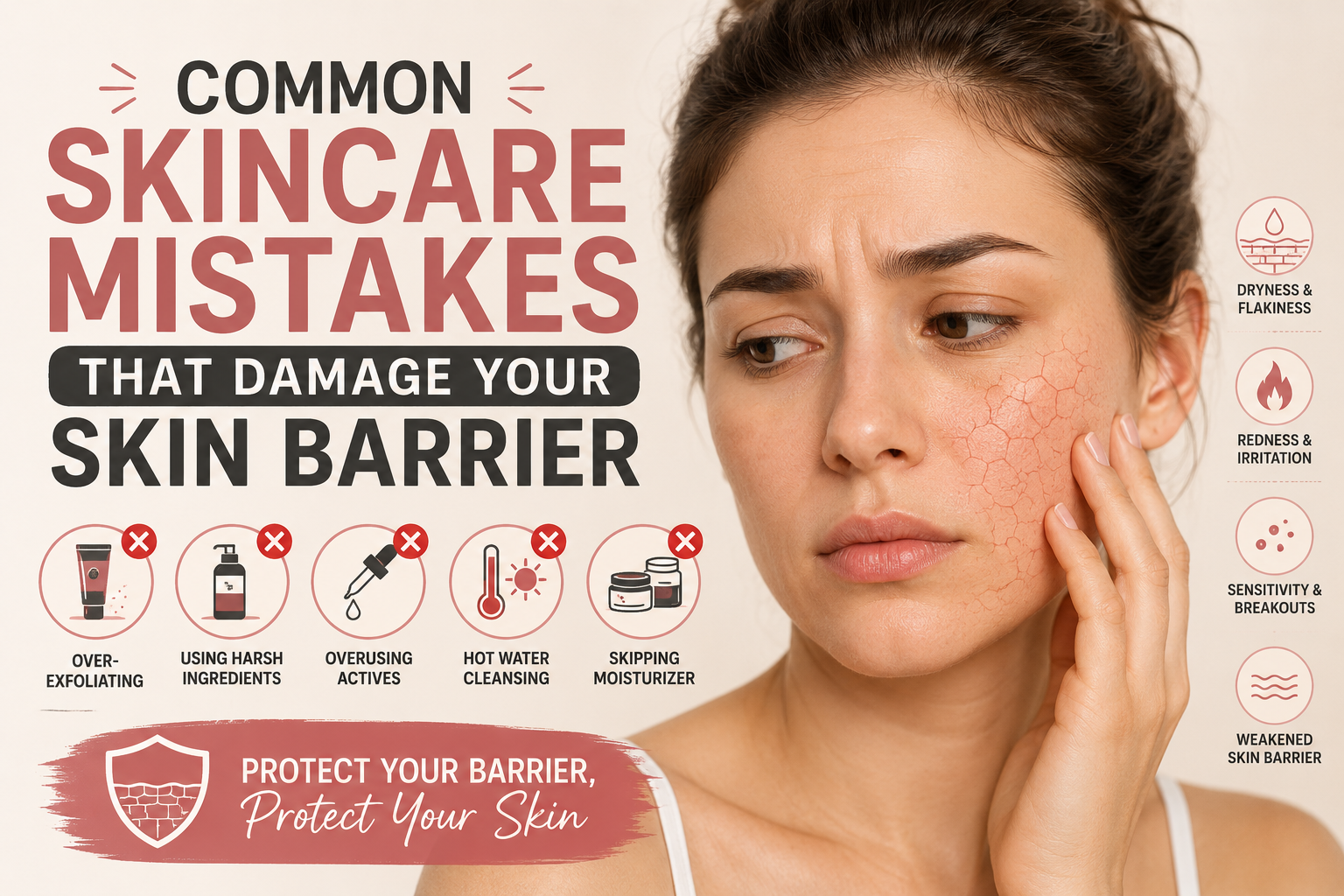
Your skin barrier, technically called the stratum corneum, is the outermost layer of your skin. Think of it like a brick wall. The bricks are dead skin cells called corneocytes, and the mortar holding them together is a mixture of lipids including ceramides, fatty acids, and cholesterol. This structure is remarkably smart. It keeps moisture inside your skin while keeping irritants, bacteria, pollutants, and allergens out.
When the barrier is healthy and intact, your skin feels comfortable, looks plump and clear, and can handle most of what the environment throws at it. When the barrier is damaged, those lipid gaps widen. Moisture escapes too easily, a condition called transepidermal water loss. And because the wall has cracks in it, all sorts of things that should stay out can now get in. That is when you start experiencing inflammation, sensitivity, breakouts, and that tight, uncomfortable feeling that no amount of moisturizer seems to fully fix.
The skin barrier is also connected to your skin’s natural microbiome, the community of beneficial bacteria that live on its surface. A damaged barrier throws this microbiome off balance, which can trigger or worsen conditions like eczema, rosacea, psoriasis, and acne.
Now that you understand what is at stake, let us get into the mistakes.
Mistake One: Over-Exfoliating

Exfoliation is one of those things that feels so satisfying that it is easy to overdo. The logic makes sense on the surface: removing dead skin cells reveals smoother, brighter skin underneath. And it does, when done correctly. The problem is that exfoliation has become a daily habit for a lot of people, and that is almost always too much.
When you exfoliate, whether with a physical scrub or a chemical exfoliant like an AHA or BHA, you are removing a layer of dead skin cells. But those dead cells are part of your skin barrier. They are not just waste sitting on top of healthy skin. They are the bricks in that wall. Strip them away too often and your barrier starts breaking down.
Signs of over-exfoliation include skin that feels tight or stinging, a shiny or waxy appearance, increased sensitivity to products you used to tolerate fine, redness, breakouts in unusual spots, and sometimes a burning sensation when you apply your moisturizer or serum.
The fix is simpler than most people expect. For most skin types, exfoliating two to three times per week is plenty. If you have sensitive skin or a compromised barrier, dropping down to once a week or even every ten days is not going too far. When you are repairing your barrier, it is often best to stop all chemical exfoliation entirely for two to four weeks and focus on rebuilding.
And when you do exfoliate, be thoughtful about layering. Using a retinol product, a vitamin C serum, and a chemical exfoliant in the same routine is a recipe for barrier damage even if each product is used at a reasonable frequency individually. These actives compound, and your skin barrier pays the price.
Mistake Two: Using Cleansers That Are Too Harsh
Cleansing is something almost everyone does morning and night, which means a bad cleanser causes damage twice a day, every single day. Over weeks and months, that adds up to serious barrier disruption.
The biggest issue with harsh cleansers is that they strip your skin’s natural oils. Your skin produces sebum for a reason. It is part of the lipid matrix that holds your barrier together. When a cleanser is too aggressive, it removes not just makeup, dirt, and sunscreen but also the protective oils your skin needs to stay intact.
A telltale sign of a cleanser that is too harsh is that tight, squeaky-clean feeling right after washing. That feeling has somehow been marketed as a sign of a thorough clean, but what it actually means is that your skin just lost a significant amount of its protective lipid layer. Healthy cleansing should leave your skin feeling comfortable and balanced, not tight or dry.
Sulfates, particularly sodium lauryl sulfate and sodium laureth sulfate, are among the most common culprits. These are surfactants that do an excellent job of removing oil and dirt, but they are notoriously harsh on the skin barrier. Foaming cleansers and gel cleansers often contain these ingredients, which is why people with dry or sensitive skin frequently struggle with them.
The skin also has a natural pH that sits between 4.5 and 5.5, meaning it is slightly acidic. Many traditional soaps and bar cleansers have a much higher, more alkaline pH, sometimes around 9 or 10. Washing your face with a high-pH cleanser disrupts the acid mantle, which is a thin film on the skin’s surface that plays a crucial role in maintaining barrier function and keeping harmful bacteria at bay.
Switching to a gentle, pH-balanced cleanser is one of the single most impactful changes you can make for your skin barrier. Cream cleansers, micellar waters, balm cleansers, and low-foam gel cleansers tend to be far more barrier-friendly. Look for formulas that specifically avoid sulfates, synthetic fragrances, and high-alkalinity ingredients.
Mistake Three: Skipping or Underapplying Moisturizer

If there is one habit that consistently shows up across skin barrier research, it is the role of consistent moisturization in maintaining and repairing the barrier. And yet skipping moisturizer, applying too little, or choosing the wrong formula are extremely common habits that cause real damage over time.
Moisturizers work in three key ways. Humectants like hyaluronic acid and glycerin draw water into the skin from the environment and deeper layers. Emollients like shea butter, squalane, and plant oils fill in the gaps in the skin barrier and soften the texture of the skin. Occlusive like petrolatum and dimethicone form a physical seal over the skin’s surface to lock all of that moisture in and slow down transepidermal water loss.
An effective moisturizer ideally contains all three types of ingredients, though the ratio depends on your skin type. Oilier skin types can get away with lighter, humectant-forward formulas. Drier skin types need more occlusives to truly seal and protect the barrier.
The mistake many people make is assuming their skin does not need a moisturizer because it is already oily. Oily skin can absolutely have a compromised barrier. In fact, when the barrier is damaged and the skin is losing water too quickly, the skin sometimes overproduces oil as a compensatory response. Skipping moisturizer in this case makes the problem worse, not better.
Another common mistake is applying moisturizer to fully dry skin. Humectants work best when applied to slightly damp skin, ideally within a few minutes of cleansing, because they need water to pull into the skin. Waiting until your skin is completely dry reduces the effectiveness of your moisturizer significantly.
Mistake Four: Using Too Many Active Ingredients at Once
The modern skincare market is absolutely flooded with active ingredients: retinoids, vitamin C, niacinamide, AHAs, BHAs, PHAs, peptides, azelaic acid, benzoyl peroxide, the list goes on. Each of these ingredients, when used properly, can deliver real benefits. But piling them on top of each other in the same routine or even the same week is one of the most common and damaging mistakes people make.
Active ingredients work by interacting with your skin at a cellular level. They cause changes in cell turnover, stimulate collagen production, or create a controlled chemical reaction that removes dead skin. These processes require recovery time. When you introduce multiple actives simultaneously, you are essentially keeping your skin in a constant state of working overtime, and it never gets a chance to rest and rebuild.
The result is a compromised skin barrier that manifests as persistent redness, peeling, breakouts, or extreme sensitivity. People often mistake these reactions for purging or adjustment periods, when in reality the skin is telling them to back off.
A smarter approach is to introduce one new active at a time, give it at least four to six weeks before adding anything else, and pay close attention to how your skin responds. Some combinations are also genuinely problematic. Retinol and AHA acids, for example, when used together can cause significant irritation. Vitamin C and niacinamide were once thought to cancel each other out (this has been partially debunked, but they can still cause flushing in some people). Benzoyl peroxide deactivates retinol.
Simplifying your routine when your skin is struggling is not giving up. It is smart, evidence-based skincare. A gentle cleanser, a solid barrier-repairing moisturizer, and SPF is often all that damaged skin needs to recover.
Mistake Five: Washing Your Face with Hot Water
This one surprises people because hot showers feel so good, and washing your face while you are in there seems perfectly convenient. But hot water is genuinely damaging to your skin barrier, and it is something most people never think to question.
Hot water dissolves the lipids in your skin barrier. Remember that mortar holding the bricks together? Heat liquefies it. Every time you wash your face or shower with hot water, you are literally melting away part of the structure that keeps your barrier intact. Hot water also dilates blood vessels and increases inflammation, which is why people with rosacea or sensitive skin almost always notice an immediate flare-up after a hot shower.
The solution is lukewarm water. It does not have to be cold, though cold water has its own benefits for reducing puffiness and tightening pores temporarily. Lukewarm is perfectly effective at removing cleanser and rinsing the skin without stripping the barrier. Making this one change alone can produce noticeable improvements in skin comfort and sensitivity within a few weeks.
Mistake Six: Not Wearing Sunscreen Daily
Sunscreen gets talked about mostly in the context of preventing skin cancer and reducing signs of aging, and while those are both critically important reasons to wear it, the role of UV exposure in skin barrier damage is often left out of the conversation.
UV radiation, particularly UVA rays, penetrates deep into the skin and causes oxidative damage. This damage degrades ceramides and other lipids in the skin barrier, weakening its structure. Regular sun exposure without protection leads to a chronically compromised barrier over time, even if you never visibly burn.
Studies have shown that skin that is regularly exposed to UV radiation has significantly lower ceramide levels than protected skin. Since ceramides are one of the primary structural components of the skin barrier, this depletion directly compromises your skin’s ability to retain moisture and defend against external stressors.
Wearing a broad-spectrum SPF 30 or higher every single day, not just on sunny days, not just when you are going to the beach, is one of the most foundational acts of skin barrier maintenance there is. UV rays come through clouds and windows. They are present year-round, even in winter. Skipping sunscreen because it looks overcast outside is a habit worth breaking immediately.
The barrier-friendly SPFs to look for are mineral formulas with zinc oxide or titanium dioxide, or well-formulated chemical SPFs that do not contain irritating fragrances. If you have previously avoided sunscreen because it felt heavy or greasy, the newer generations of mineral and hybrid SPFs are dramatically lighter and more comfortable.
Mistake Seven: Ignoring Fragrance in Skincare Products
Fragrance is one of the most common causes of skin barrier damage and allergic contact dermatitis in skincare, and it is also one of the most overlooked. People assume that if a product smells nice and does not immediately cause a reaction, it must be fine. But fragrance-related damage is often cumulative and delayed, meaning the connection between the product and the skin response can be easy to miss.
Both synthetic fragrance and natural fragrance, which includes essential oils, can be problematic. This surprises people because natural is often assumed to mean safer. But botanical extracts like lavender oil, citrus oils, and rose extracts are well-documented skin sensitizers. They contain volatile compounds that can cause allergic reactions and inflammation over repeated use, even in people who initially showed no reaction.
Fragrance in skincare products can disrupt the lipid structure of the skin barrier directly, and it can trigger immune responses that lead to chronic inflammation. For people who already have sensitive, reactive skin, eliminating fragrance from their routine is often the single change that produces the biggest improvement.
Reading ingredient labels carefully is important here. Fragrance can be listed under many names: parfum, fragrance, linalool, limonene, eugenol, citronellol, geraniol, and many others. A good approach for sensitive skin types is to look specifically for products labeled fragrance-free rather than unscented, since unscented products may contain masking fragrances that neutralize smell without removing the sensitizing compounds.
Mistake Eight: Using Alcohol-Heavy Products
Alcohol has a complicated reputation in skincare, and for good reason. There are certain types of fatty alcohols like cetyl alcohol and stearyl alcohol that are actually beneficial for the skin barrier. They are emollients that help soften and condition the skin. The problem is with denatured alcohol, also listed as alcohol denat, SD alcohol, or ethanol on ingredient labels.
Denatured alcohol is used in skincare as a preservative, to help products feel lighter on the skin, and to drive other ingredients deeper into the skin. It creates that instantly refreshing, fast-drying sensation that feels clean and effective. But it does this partly by dissolving the lipids in your skin barrier. Regular use of high-alcohol products is one of the more reliable ways to chronically damage your barrier over time.
Products most likely to contain high amounts of denatured alcohol include certain toners, particularly astringent formulas marketed for oily or acne-prone skin, some gel moisturizers, many sunscreens, and a lot of setting sprays. If alcohol appears in the first few ingredients of a product, the concentration is high enough to be a real concern for skin barrier health.
Switching to alcohol-free toners, essences, and serums is a reasonable and often significant step forward for people dealing with barrier damage or chronic sensitivity.
Mistake Nine: Neglecting Your Skin Barrier During Winter
Most people know that winter is harder on skin. The cold air, low humidity, and dry central heating all contribute to moisture loss. What fewer people realize is that they often respond to winter skin by scrubbing more, thinking the flakiness is a buildup of dead skin cells that needs to be removed, when actually it is their damaged, water-depleted barrier desperately trying to regenerate.
In cold weather, transepidermal water loss increases significantly. The skin barrier has to work harder to maintain hydration, and in low humidity environments it simply cannot keep up without support. This is not a time for intensive exfoliation or strong actives. This is a time to scale back your routine, increase the richness of your moisturizer, and be far more protective.
Practical adjustments for winter include switching to a richer, cream-based or balm-based moisturizer, applying a facial oil as a top coat to lock in moisture, using a humidifier in your bedroom or home office, and lowering the temperature of your showers. These simple changes can prevent the significant barrier damage that accumulates through cold weather months.
Mistake Ten: Picking, Touching, and Rubbing Your Skin
The physical mechanics of how we handle our skin are easily underestimated. Rubbing your face aggressively with a towel after washing, picking at blemishes, popping pimples, or even resting your face in your hands throughout the day all contribute to skin barrier damage in ways that no serum can easily counteract.
Aggressive towel drying, for instance, creates micro-tears in the skin and removes more moisture than gentle patting. It also causes friction that disrupts the surface layer of the barrier. Switching to gently patting dry with a soft cotton towel or cloth is a small change with a meaningful impact.
Picking at spots is a habit that goes beyond barrier damage. It pushes bacteria deeper into the skin, causes post-inflammatory hyperpigmentation, and creates actual wounds in the skin’s surface. Every picked blemish is a barrier breach that takes longer to heal than the original blemish would have.
Even the act of frequently touching your face transfers bacteria and irritants from your hands to your skin. People touch their faces dozens of times per day without realizing it. Becoming more conscious of this habit, and washing your hands frequently, removes a surprising amount of unnecessary skin irritation.
Mistake Eleven: Not Giving Your Skin Time to Recover
We live in a culture of instant results, and the skincare industry feeds that expectation relentlessly. A new product that promises visible results in three days. A serum that claims to transform your skin overnight. The result is that people rarely give their skin the patience it actually needs.
Skin barrier repair does not happen quickly. The skin cell cycle, the process by which new cells form in the deeper layers and work their way up to replace dead ones on the surface, takes approximately 28 days in young adults and can take up to 40 to 60 days in people over 40. This means that real, visible improvement in your skin barrier can take weeks to months of consistent, gentle care.
The most common mistake during this recovery window is giving up too soon. People try a simplified, barrier-focused routine for two weeks, do not see the transformation they expected, and jump back to their full stack of actives. This resets the recovery clock and keeps the skin in a perpetual state of disruption.
Trusting the process of a gentle, simplified routine for a full 30 days before reassessing is one of the most counterintuitive but important pieces of advice for anyone dealing with a damaged skin barrier. Resist the urge to add things back in before your skin has had a genuine opportunity to recover.
Mistake Twelve: Overlooking Diet and Internal Hydration
Skincare is ultimately topical, and no amount of applied product can fully compensate for what your skin needs from the inside. This is not about selling detox teas or promoting restrictive diets. It is about understanding that the lipids and proteins that make up your skin barrier are built from what you eat and drink.
Essential fatty acids, particularly omega-3 and omega-6 fatty acids, are critical structural components of the lipid matrix in the skin barrier. A diet low in these fats, or one that is heavily processed and high in inflammatory foods, directly affects the quality and integrity of your skin barrier. Sources of omega-3s include fatty fish, walnuts, flaxseeds, and chia seeds. Omega-6s come from plant oils, nuts, and seeds.
Water intake matters too. Skin hydration is not only about what you apply topically but also about systemic hydration. Chronically dehydrated skin cannot maintain proper barrier function regardless of how good your moisturizer is. Drinking adequate water throughout the day, generally around 1.5 to 2 liters for most adults but more in hot climates or if you are physically active, supports your skin barrier from within.
Sleep is another internal factor that is often left out of skincare discussions. During sleep, the skin undergoes most of its repair and regeneration. The body produces growth hormone during deep sleep stages, which drives cell turnover and barrier repair. Consistently poor sleep is correlated with a higher rate of transepidermal water loss and reduced barrier function. If you are struggling with your skin and your sleep is poor, that connection is likely more significant than any product in your bathroom cabinet.
How to Rebuild a Damaged Skin Barrier: A Practical Recovery Plan
If you have recognized yourself in several of the mistakes above, the good news is that the skin barrier is genuinely resilient. With the right approach, it can recover, often more quickly than people expect once the offending habits are removed.
The foundation of barrier recovery is simplicity. Strip your routine down to three steps: a gentle, fragrance-free, pH-balanced cleanser; a barrier-repairing moisturizer that contains ceramides, fatty acids, and humectants; and a broad-spectrum SPF 30 or higher in the morning. Nothing else. No actives, no exfoliation, no serums with strong penetration enhancers.
Use lukewarm water to cleanse. Pat dry gently. Apply your moisturizer immediately while your skin is still slightly damp. Wear your SPF every morning regardless of weather. Do this consistently for at least four weeks before considering adding anything back in.
Ceramide-based moisturizers are particularly effective during barrier recovery because they replenish the very lipids that have been depleted. Ingredients like ceramide NP, ceramide AP, ceramide EOP, cholesterol, and linoleic acid work to literally rebuild the structural components of your barrier. They are not glamorous or exciting, but they work.
At night, consider using a heavier moisturizer or adding a facial oil as a last step to maximize occlusion and reduce overnight water loss. Squalane, jojoba oil, and rosehip oil are gentle options that reinforce the barrier without clogging pores for most skin types.
If your skin is in a highly reactive state, you may also want to consider using colloidal oatmeal products, which have demonstrated anti-inflammatory and barrier-supporting properties in clinical research. They are especially helpful for skin that is red, itchy, or acutely sensitive.
How to Know Your Skin Barrier Is Healing
Progress is not always linear and it is not always immediately visible, but there are signs that your barrier is recovering. Your skin will start to feel more comfortable after cleansing rather than tight or stripped. The stinging or burning when you apply products will gradually diminish. Persistent redness will begin to calm. Breakouts may become less frequent as the microbiome rebalances. Your skin will start to look less dull and more plump over time.
Once your skin has reached a stable, comfortable state, you can begin reintroducing actives one at a time, starting with the gentlest options and using them at low frequency. A retinoid once a week. A mild AHA every ten days. Monitor your skin carefully at each stage and do not rush the process. The slow and steady approach protects everything you have worked to repair.
Final Thoughts
Your skin barrier is not glamorous. It does not have a visible glow. It does not feature in before-and-after transformations the way a brightening serum or a laser treatment might. But it is the foundation that every other skincare result depends on. Without a healthy barrier, your serums cannot do their job properly, your skin cannot respond well to treatments, and you will find yourself stuck in a frustrating cycle of irritation and reactivity no matter how much you invest in your routine.
Taking care of your skin barrier means embracing a kind of skincare philosophy that values restraint as much as action. It means understanding that more is not always more, that gentle and consistent often outperforms aggressive and complicated, and that listening to your skin is more valuable than following a ten-step routine because it is trending.
The mistakes covered in this article are not failures. They are incredibly common, partly because the skincare industry profits from complexity and partly because good information is harder to find than product recommendations. Now that you have a clearer picture of what the skin barrier is, how it gets damaged, and how to protect and repair it, you are in a much stronger position to make choices that genuinely serve your skin in the long term.
Treat your skin barrier with the same care and consistency you would give to any other aspect of your health, and it will reward you with resilience, clarity, and comfort that no single product could ever provide on its own.
This article is written for informational purposes. If you are experiencing persistent or severe skin conditions, consult a qualified dermatologist for personalized guidance.
