Smart Buyer Checklist Before Checkout: A Complete Guide to Safe Online Shopping in 2026
Online shopping has become second nature for most of us. A few taps, a saved card, and a package shows up at the door a couple of days later. But that convenience has a flip side. Scammers have gotten a lot better at building fake stores, faking urgency, and mimicking the brands we already trust. According to consumer protection agencies, online shopping fraud remains one of the most frequently reported scam categories, and the tactics keep evolving every year.
That is exactly why a pre checkout checklist matters. Before you enter your card details or hit that tempting “buy now” button, running through a few quick checks can save you from a headache, a chargeback dispute, or worse. This guide walks through everything a smart buyer should verify before completing a purchase online, from checking a seller’s legitimacy to spotting fake urgency tactics and understanding your refund rights.
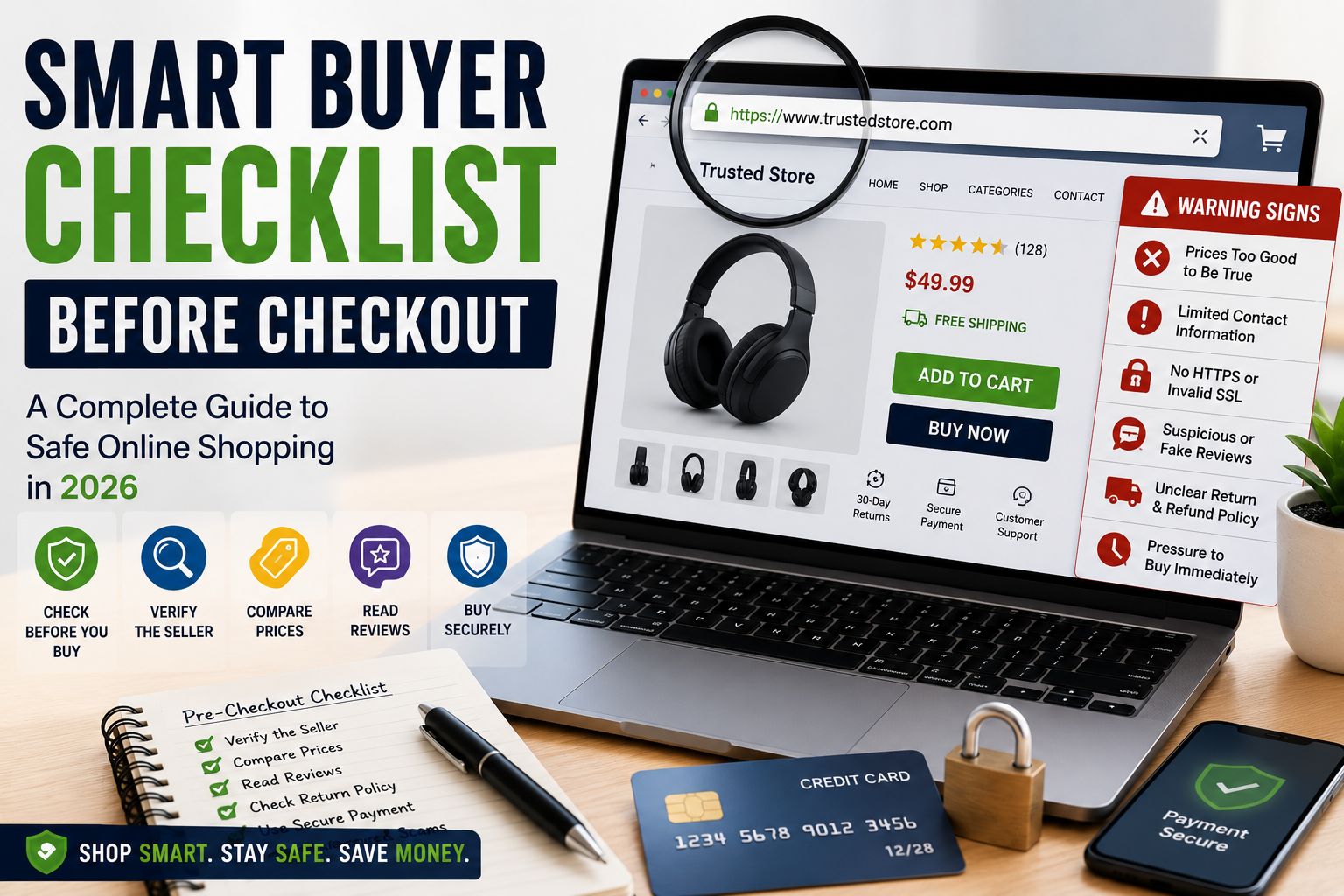
Quick Checklist Before Checkout
- Verify the seller’s contact details
- Compare the price with other retailers
- Read independent reviews
- Check shipping and return terms
- Use a payment method with buyer protection
- Avoid pressure to buy immediately
- Never pay unfamiliar sellers through gift cards, wire transfers, or crypto
Why a Pre-Checkout Checklist Matters
It is easy to assume that scams only happen to people who are not paying attention. In reality, fraudulent sellers and phishing schemes are designed to look convincing, sometimes more convincing than the real thing. A well built fake store can copy a legitimate brand’s photos, product descriptions, and even customer reviews. Add a countdown timer and a “only 3 left in stock” banner, and even careful shoppers can end up rushing a decision they would normally slow down for.
A checklist works because it interrupts that rush. It gives you a moment to pause, verify, and confirm before your money leaves your account. Think of it the same way you would think of a pilot’s pre flight checklist: not because something will always go wrong, but because the routine itself prevents most of the problems that could.
Step 1: Research the Seller Before You Trust Them
Before adding anything to your cart, it is worth spending two or three minutes confirming that the business is real and reputable. This single habit prevents a large share of online shopping fraud.
Check the website’s basic legitimacy
- Look for a working “Contact Us” page with a real phone number, email address, and physical address.
- Search the business name along with words like “reviews,” “scam,” or “complaints” to see what other shoppers are saying.
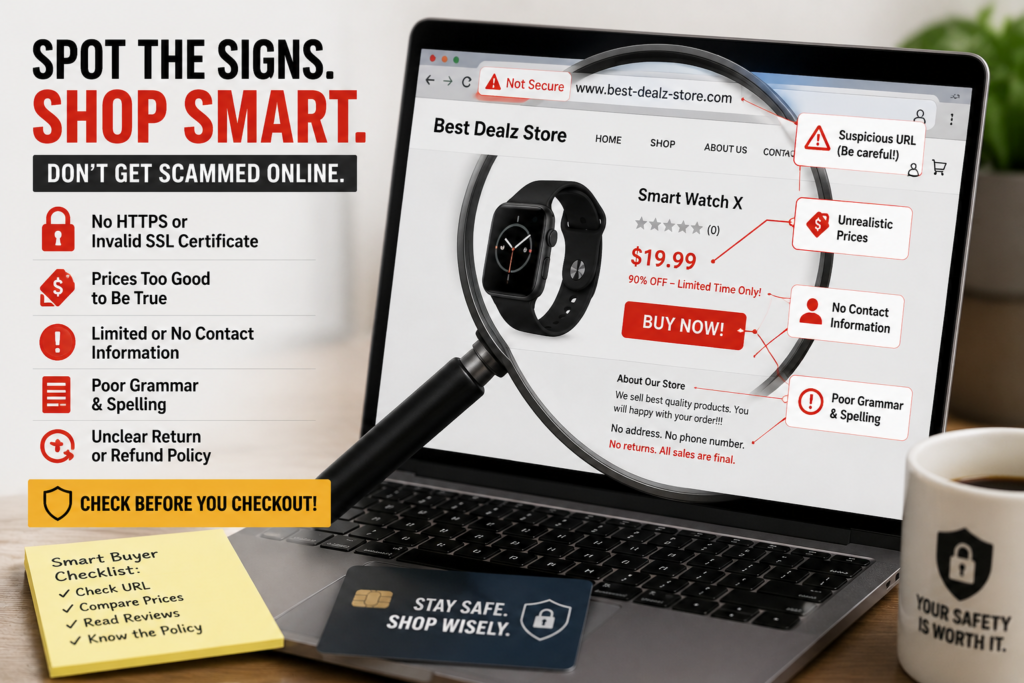
- Check how long the domain has been registered. Brand new domains selling heavily discounted branded goods are a common red flag.
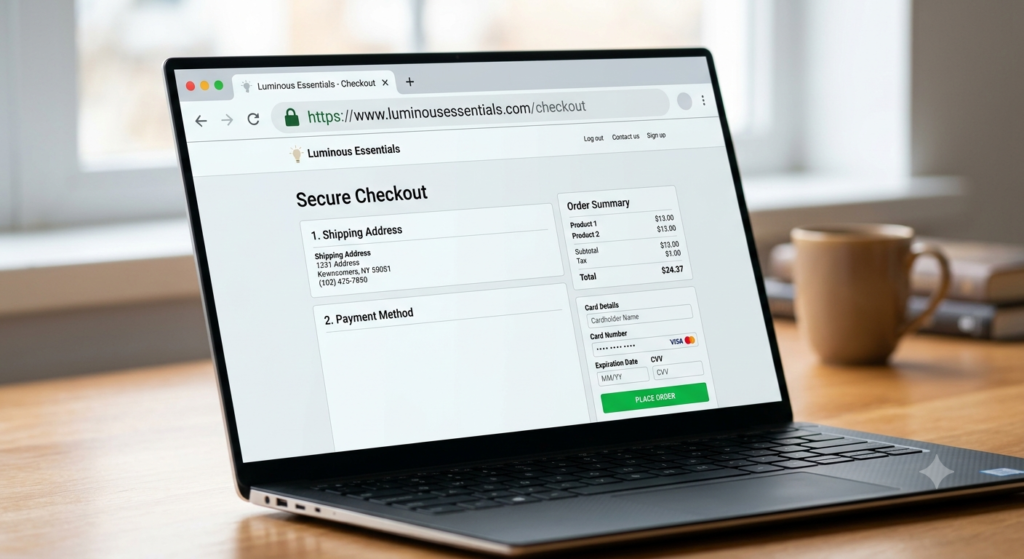
- Confirm the website uses HTTPS and shows a padlock icon in the address bar. This means your connection is encrypted, but it does not guarantee that the seller itself is legitimate, so always check other trust signals as well.
Watch for red flags in the storefront itself
- Product photos that look copied, inconsistent, heavily edited, or unrelated to the product may be a warning sign. Reverse-image searching a product photo can sometimes reveal whether it has been copied from another store. That said, some legitimate sellers also use AI generated images, so this alone should not be your only signal.
- Listings with only one or two photos, especially for expensive items, deserve extra scrutiny since genuine sellers usually show multiple angles.
- Spelling errors, awkward grammar, or inconsistent branding across pages are common signs of a rushed or fraudulent site.
- Prices that are dramatically lower than every other retailer selling the same item are one of the oldest scam tactics in the book, and it still works because the discount feels too good to pass up.
Step 2: Compare Prices Before You Commit
Comparison shopping is not just about finding the best deal anymore. It has also become a quiet fraud detection tool. If one store is selling a product for a fraction of what every other retailer charges, that gap in price is often the first clue that something is off.
Before checkout, try running a quick search for the same product across two or three other retailers. Browser extensions and price tracking tools can also show you the historical price of an item, which is especially useful during big sales events when “70 percent off” claims are not always accurate. If a deal looks unusually good compared to the rest of the market, treat that as a signal to dig a little deeper rather than a reason to buy faster.
Step 3: Read Reviews With a Critical Eye
Reviews remain one of the most useful tools a buyer has, but they can also be manipulated. Some fraudulent sellers pay for fake five star reviews or copy testimonials from unrelated products. Here is how to read reviews more carefully.
- Look for reviews with specific details about sizing, delivery time, or product quality rather than generic praise.
- Be cautious if almost every review is five stars and posted within a short window of time, which can indicate a coordinated review campaign.
- Check for verified purchase tags where the platform offers them.
- Cross reference reviews on independent sites, not just the seller’s own website, since a store can control what appears on its own pages.
Step 4: Understand the Return, Refund, and Shipping Policy
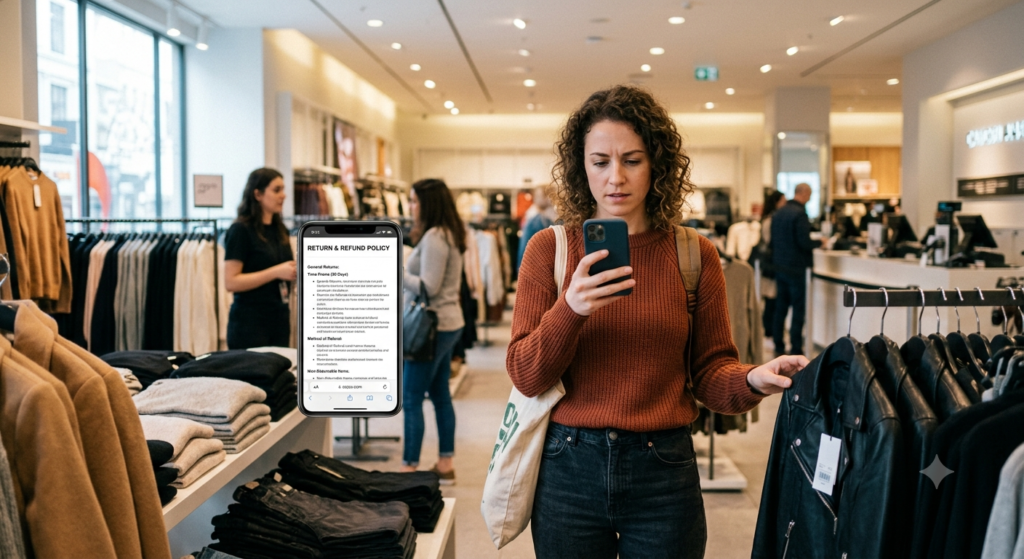
Before you check out, it is worth reading the fine print on shipping timelines, return windows, and refund conditions. This is one of the most commonly skipped steps, and also one of the most important.
Questions to answer before you buy
- How long does shipping typically take, and does the seller commit to a delivery window?
- What happens if the item never arrives?
- Is there a clear return policy, and does it apply to sale items?
- Will you receive a full refund, or only store credit if something goes wrong?
- Who covers the cost of return shipping?
In the United States, consumer protection regulations generally require sellers to ship items within the timeframe promised, or within 30 days if no specific date is given, and to provide a proper refund rather than store credit if the order was never shipped. Rules can vary by country and by product category, so it is worth checking the specific terms on the store’s own policy page rather than assuming a general rule applies.
Step 5: Choose a Safer Payment Method
How you pay can matter just as much as what you buy. Some payment methods offer strong fraud protection, while others leave you with almost no way to recover your money if something goes wrong.
Safer options generally include
- Credit cards, which often come with fraud liability protections and dispute processes through your card issuer.
- Trusted digital wallets such as PayPal, Apple Pay, or Google Pay, which add a layer between your card details and the merchant.
- Reputable buy now pay later services offered directly through the retailer’s official checkout, rather than through a third party link sent in a message.
Methods to be cautious with
- Wire transfers and bank to bank transfers, which are extremely difficult to reverse.
- Gift cards used as a form of payment for goods, which is a classic scam request since gift card payments cannot typically be traced or refunded.
- Cryptocurrency, when it is the only payment option offered, since transactions cannot usually be reversed once sent.
- Peer to peer payment apps like Zelle, Venmo, or Cash App for purchases from unfamiliar sellers, since these are designed for sending money to people you know, not for commercial transactions with buyer protection.
If a seller insists on one of these higher risk payment methods and refuses other options, that alone is a strong signal to walk away from the purchase.
Step 6: Slow Down When You Feel Rushed
Urgency is one of the most reliable tools in a scammer’s playbook. Countdown timers, “only 2 left in stock” banners, flash sales that expire in minutes, and messages warning that your account will be locked unless you act immediately are all designed to short circuit careful thinking.
A simple rule helps here: if a message or website is pushing you to decide fast, pause on purpose. Close the tab, wait ten minutes, and come back to it. Genuine discounts and legitimate business communications are rarely dependent on you acting within the next sixty seconds.
Step 7: Protect Your Personal and Financial Information
Even on legitimate looking sites, it is worth thinking carefully about how much personal information you are handing over.
- Only enter payment details on pages that show “https” and a padlock icon.
- Be wary of checkout forms asking for information that has nothing to do with completing a purchase, such as your social security number or a full copy of an identification document.
- Use unique, hard to guess passwords for shopping accounts, and consider a password manager to keep track of them.
- Turn on two factor authentication wherever it is offered, especially for accounts that store saved payment methods.
- Avoid saving your card details on every site you shop with. It is more convenient, but it also means more places where your data could potentially be exposed if that retailer experiences a data breach.
Step 8: Watch Out for Fake Delivery and Tracking Scams
One of the fastest growing scam types in recent years involves fake shipping notifications sent by text or email. These messages typically claim there is a problem with a delivery, a customs fee that needs to be paid, or a package waiting to be rescheduled, and they include a link that leads to a fake site designed to steal payment information.
Before clicking any delivery related link sent to you, go directly to the retailer’s website or the shipping carrier’s official app to check your order status. Legitimate delivery updates do not typically ask you to pay a small fee through an unfamiliar link to release your package.
Step 9: Be Careful With Subscriptions and Free Trials
Free trial offers and subscription boxes have become a common checkout upsell, and not all of them are transparent about what happens after the trial period ends. Before agreeing to a free trial, check:
- What the price will be once the trial ends, and how clearly that is disclosed.
- How to cancel, and whether cancellation requires a phone call rather than a simple online button.
- Whether your card will be charged automatically, and on what date.
Setting a calendar reminder a day or two before a free trial ends is a simple habit that can prevent an unwanted recurring charge from slipping through unnoticed.
Step 10: Trust Your Instincts
Sometimes the clearest warning sign is not a specific red flag but a general feeling that something is off. If a deal feels too good, if a seller is pressuring you, or if the checkout process feels unusually complicated for a simple purchase, it is worth stepping back. Reputable sellers rarely need to rely on high pressure tactics to close a sale.
A Quick Reference Table: What to Check Before You Buy
| Checklist Item | Why It Matters |
|---|---|
| Website uses https and a padlock icon | Confirms your data is encrypted during transmission |
| Seller has verifiable contact details | Legitimate businesses are reachable if something goes wrong |
| Price matches similar listings elsewhere | Extreme discounts are a common scam signal |
| Reviews look specific and varied | Helps rule out fake or bulk purchased reviews |
| Return and refund policy is clear | Protects you if the product does not arrive or match expectations |
| Payment method offers buyer protection | Credit cards and trusted wallets make disputes easier |
| No pressure to act within minutes | Urgency tactics are designed to bypass careful thinking |
| Two factor authentication enabled | Adds a layer of protection to your shopping accounts |
What to Do If Something Already Went Wrong
Even careful shoppers can occasionally get caught out, especially as scam techniques keep changing. If you suspect you have been scammed, acting quickly can limit the damage.
- Contact your bank or credit card provider right away to flag the transaction and ask about reversing the charge.
- Change the password on the account used for that purchase, and on any other account where you reused the same password.
- Report the incident to your country’s consumer protection authority, such as the Federal Trade Commission in the United States.
- Keep records of the transaction, including screenshots, emails, and order confirmations, in case you need them for a dispute.
- Monitor your statements for any follow up unauthorized charges, since a compromised card is sometimes tested with small transactions before larger ones.
This is general guidance based on common consumer protection practices, and it may not apply the same way in every situation. For anything involving significant financial loss or identity theft, it is worth speaking with your bank directly or consulting a consumer protection agency for advice specific to your case.
Building Better Shopping Habits Long Term
A checklist works best when it becomes a habit rather than a one time exercise. A few small changes can make a lasting difference:
- Bookmark the official websites of stores you shop with often, rather than relying on search results or ads to find them again.
- Set up transaction alerts with your bank so you are notified immediately of any new charge.
- Periodically review which accounts have your saved card details, and remove ones you no longer use.
- Talk to family members, especially those who may be less familiar with common scam tactics, about the warning signs covered in this guide.
Online shopping is not becoming any less convenient, and it is not becoming any less targeted by fraud either. The good news is that most scams rely on a handful of repeated tactics: urgency, unrealistic discounts, unfamiliar payment requests, and copied storefronts. Once you know what to look for, most of these become fairly easy to spot before you ever reach checkout.
Frequently Asked Questions
How can I tell if an online store is legitimate before I buy?
Check for a working contact page, search for independent reviews outside the store’s own website, confirm the site uses https, and compare the pricing against other retailers selling the same product. A combination of these checks is more reliable than relying on just one signal.
Is it safer to pay with a credit card or a debit card online?
Credit cards generally offer stronger fraud protection than debit cards because disputed charges can often be reversed before the money leaves your account. Debit card fraud usually means the funds are already gone while a dispute is investigated. This is general guidance, and specific protections can vary by card issuer and country, so it is worth checking your own provider’s policy.
What should I do if I already sent money to a scammer?
Contact your bank or payment provider immediately to report the transaction, since some payment methods have a short window in which a transfer can potentially be stopped or reversed. Report the incident to your local consumer protection agency, and change any passwords associated with the account used.
Are heavily discounted luxury items online ever legitimate?
It is uncommon for genuine designer items to be sold at a fraction of retail price through unfamiliar websites. Extremely low prices on luxury goods are one of the most consistent red flags reported by consumer protection organizations, so it is worth researching the seller thoroughly before purchasing.
Why do I keep getting texts about delivery problems I did not expect?
This is a common scam technique known as smishing, where fraudulent text messages mimic shipping carriers to create urgency. Avoid clicking links in unexpected delivery texts, and instead check your order status directly through the retailer’s website or the carrier’s official app.
Does using a secure https website guarantee a store is safe?
Not entirely. An https connection means the data sent between your browser and the site is encrypted, but it does not confirm that the seller itself is trustworthy. Scammers can and do use https on fraudulent sites, so it should be treated as one safety check among several, not the only one.
How do I cancel a free trial before it turns into a paid subscription?
Check the cancellation instructions at the time you sign up, since some services require cancellation through a specific portal or a phone call rather than a simple button. Setting a reminder a day or two before the trial period ends is a practical way to avoid an unexpected charge.
Final Thoughts
Shopping online should feel convenient, not stressful. The goal of a pre checkout checklist is not to make you suspicious of every store you visit, but to give you a quick, repeatable way to separate legitimate deals from the ones designed to catch you off guard. A few extra minutes spent checking a seller’s reputation, comparing prices, and reading the fine print can save you far more time and money than it costs.
The next time you find yourself about to check out, run through this list. It only takes a few minutes, and it might be the difference between a great deal and a costly mistake.
We write rarely, but only the best content.
